Request a free consult today!

6 Steps to Overcoming the "Protestant Work Ethic"
Heart disease, which is largely driven by stress, is the number one cause of death in America. The "Protestant work ethic," deeply rooted in the American psyche, may be driving us to an early grave. Here's how to combat it.
DECONSTRUCTIONRELIGIOUS TRAUMASPIRITUAL ABUSE
Robin Thinks!
7 min read
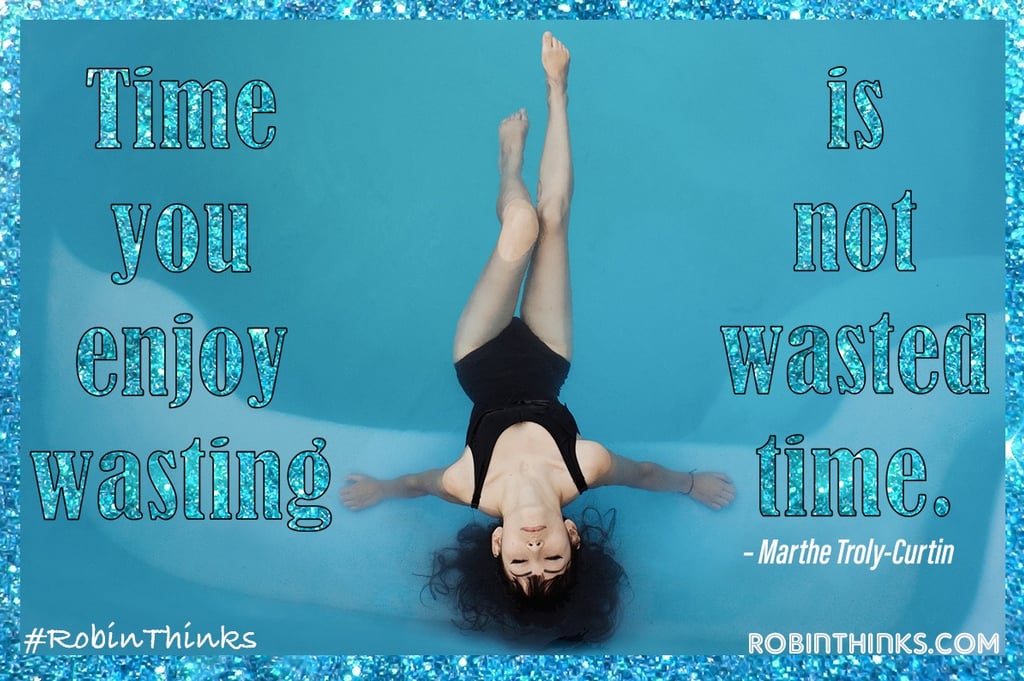
Everywhere you look, there are a multitude of products, apps, books, articles and blogs promising to help you be more productive. The question we never seem to ask ourselves, however, is what exactly is the goal of increased productivity? The goal of increasing your productivity should be to help you do more in less time, so that you need to spend less time working. In theory, the less time you spend working, the more time you should have for rest, relaxation or leisure activities, but that's not how it actually works.
Instead, we generally use productivity apps and tools to allow us to do more work - or to be more productive. This is why deconstruction is so important. Whether we know it or not (and most of us don't) we have all been indoctrinated into a set of values that we collectively hold. In America, we pride ourselves on being hard-working. So much so, in fact, that we tend to feel guilty any time we are not working or "being productive."
This is great for capitalism, but not so great for our health.
In the wake of the pandemic, we even came up with a name for this: stresslaxing. It's when you actually have the time to relax but can't, because you find relaxing to be stressful. To make matters worse, even our recreation has to be "productive," as evidenced by the phrase "work hard, play hard." When people do take time off, it is rarely to sit around the house or engage in leisure activities. We have to travel, go places, do things and have something to show for our time.
One of the principle goals of both cults and capitalism is to keep you so busy, you don’t have time to think. The reason for this is that if you ever had time to really stop and think about things, like the ultimate goal of productivity, then you might start asking yourself some dangerous questions. Questions like “what is the point of being so productive?” And eventually you might even reach the point of asking the even more dangerous question, which is “how does increased productivity benefit me?”
Cults and capitalism both depend on you never asking this question.
Here's another thing capitalists never want you to figure out. What we call time is just a segment of your life. Your life is time and your time is your life. Whatever you spend your time on, you are spending your life on. We call it "spending" because that is literally what you are doing. We also call what you do with money "spending" because money is just a symbol of your time. That's why we say time equals money. If you make $20 an hour, then your time, and therefore your life, is worth $20 an hour. If you spend $20, you just spent one hour of your life. So, here's the double whammy of capitalism. You spend your life making money, and then you spend that money, which means you are spending your life on whatever you spend your money on.
You know all those trips you feel obligated to take, to do something with your vacation time? Airlines, hotels, rental car companies, restaurants and all of the places you feel obligated to go - and post on social media so everyone knows you went - all make money when you travel. Money you had to earn with your life (time). The question is, however, are those things you actually want to do, or are they things you feel obligated or peer-pressured into doing? Capitalists want to make sure you stay so busy you never have time to figure that out.
Our "recreation" has become almost as stressful as our jobs! And who generally carries the greatest stress on these trips? Women. It is usually women who have to plan, pack and keep everyone in order and on schedule. Airlines run on a schedule, hotels run on a schedule, even amusement parks and attractions run on a schedule and it is generally left up to women to keep everyone on it and make sure everyone has what they need.
Productivity should be for the purposes of helping us finish tasks more quickly in order to give us more "free" time. But what good does it do to create free time, when we simply fill up any extra time we create with more tasks?
We have turned “productivity” into a religion in which people actually feel guilty if they spend time not producing anything.
So what is the answer?
Well, the answer to this problem is pretty much the same as the answer to almost all of our problems: personal discipline.
We’ve all heard the phrase "work/life balance” but there's just one problem with that. There are actually two kinds of work: work you get paid for and work you do not. While cleaning, cooking, childcare, shopping and running errands are all work, you don't get paid to do them unless you are doing them for someone else or someone outside your own family. So "work/ life" balance should more accurately be called "paid/ unpaid work balance."
We need to learn to develop work/rest balance rather than work/life balance.
But how can you rest, when "resting" just makes you feel guilty?
We need to start treating rest as a discipline, which we will do when we start to see the critical importance of rest. So here are five steps towards not only creating space for rest, but also changing the mindset that keeps you from doing it.
1. Keep a time journal
Budgeting your time is every bit as important as budgeting your money. After all, as the old saying goes, time is money. Or, more accurately, money is just a symbol of your time. One of the first things that almost every financial planner in the world would tell you to do when trying to get ahold of your finances is to start tracking your spending. You can't figure out where best to make changes if you don't know where it is all going in the first place. You need to do this same thing with your time. There are a number of great apps that freelancers use to track their time, that can also help you understand where all your time is going.
2. Decide what really matters to you
We are often roped into doing things for others, and/ or can find ourselves spending a great deal of time doing things that we think we are "supposed" to do or be doing. This is particularly true in an age of social media, that can make us feel like "everyone" is doing things like decorating for every holiday and living in an immaculate home. Once you have a clear picture of where your time is going, you can make better choices about what you want to keep spending your time in and what you don't.
3. Remind yourself constantly that life is not a competition
There is always going to be some mother who basically doesn't sleep, but always has an immaculate home and sends her children off to school with a home-made lunch. The same way there will always be someone you know who prides themselves on working 60- 80 hour weeks - and usually brags about it constantly. In America, we have turned busy-ness into a religion and he (or she) who works the hardest or produces the most wins. One of the hardest battles of learning to find rest is the mental one. There is always going to be someone doing more than you, but their health will inevitably pay the price, just as yours will if you don't stop competing and learn to find rest.
4. Create a time budget
It is a very safe bet that you will be shocked to find how much time you really spend on things that don't actually matter to you. Perhaps it might be the amount of time you really spend on social media, the amount of time you spend going out when all you really want to do is stay home, or the amount of time (and money) you spend on personal grooming or household chores. When creating your time budget, remember the analogy about the rocks and the sand. Prioritize the things that really matter to you first, and block out time for them, then fit in the less important things around the most important ones.
5. Make leisure activities a priority
In America, we have often been socially conditioned to think we always have to be "doing" something. The truth is, we only have the energy to do so much in a day. Ironically, the guilt we feel over doing "nothing" can actually paralyze us, so that we end up spending far more time scrolling social media or watching TV. Activities like that make us feel like we are "doing something," when we don't have the energy to be doing some kind of work.
Instead of blocking out time to do nothing, budget your time to always be doing something instead. Taking a walk is "doing" something, taking a nap is "doing" something, leisure activities like gardening, meditating, reading, journaling or even watching TV are "doing something." When you create a financial budget, it is important to budget in things that other people might find "frivolous," but are important to you. There's nothing wrong with spending time scrolling social media or watching TV, but if you don't pay attention to how long you are doing those things, they can quickly eat up your time. When you budget time for it, you won't even have to feel guilty about it.
6. Learn to say "no" - and to be okay with the consequences
In order to create time for things that really matter to you, it will require you to eliminate activities and endeavors that do not. Chances are good that the reason you do some of those things now is to make someone else happy. This is where things can get tricky. While it is important to sometimes do things just for the sake of making someone else happy, the question is how often do they make your needs, desires and happiness a priority?
Saying "no" to a boss that is constantly expecting you to work late can be tricky because saying "no" might cost you your job. This is where you have to once again evaluate your priorities. If saying "no" to working extra hours will cost you your job, it might be time to start looking for a new job. If saying "no" to spending more time than you'd like with a friend or significant other, it might be time to re-evaluate that relationship.


Learning to rest is a process that you may have to fight to achieve. The greatest and hardest battles, however, will likely not be with others, although it can and will be that at times, but with your own mind and mental conditioning. The impetus to work and achieve has been deeply conditioned into us since birth. The great irony of that is that we will often be our most productive when we are well-rested. It just might be that the greatest success will come not from working harder, but from working less.
Connect
Reach out anytime for support or questions
Get blogs, news and updates sent straight to your email!
© 2025. All rights reserved.
Based in Colorado